Theo Milner-Hansen
ART 374: Politics of Abstraction
December 13, 2025
Material Liminality: An Exhibition
Subversion of Colonial Space in the works of Jordan Nassar, Tanya Aguiñiga, and Igshaan Adams
Historically speaking, fiber manipulation technologies and techniques were inextricable from ancestral homelands. Upon the advent of globalizing exchange, however, and accelerated astronomically by colonial paradigms of settlement, extraction, and indigenous exile, the link between regional indigeneity and textile traditions was largely dissolved. By upending and redefining indigenous structures, colonial institutions—and their residual logics and infrastructures that continue to agitate—impose novel intersections of identity and space. In response, contemporary fiber artists Jordan Nassar, Tanya Aguiñiga, and Igshaan Adams speculate new fiber techniques that achieve intersectional specificity through materials informed by their conditions of postcolonial liminality. Furthermore, these artists’ engagement with fiber as a mobile and embodied medium allows works to carry historical and emotional weight, including the displacements and boundaries that define the postcolonial condition. Through an emphasis on space and movement, this exhibition argues that, by construing and collapsing postcolonial spaces, Nassar, Aguiñiga, and Adams are constructing entirely new spatial models that transgress colonial structures and recontextualize liminal identity as a generative, revolutionary condition.
Jordan Nassar’s practice provides a compelling point of departure from inherited technique, embracing his position of diasporic distance. As a New York-based Palestinian-American who did not grow up in proximity to Palestine itself, Nassar confronts the idealism and nostalgia for the homeland within diasporic communities. His embroidered, abstract landscapes are primarily composed of tatreez, a traditional Palestinian embroidery technique that continues to adorn clothing worn by Palestinians, primarily women. Prior to Israeli occupation, tatreez served dually as a hyper-regional iconographic archive and as a manifest of individual identity. Rachel Dedman’s At the Seams: A Political History of Palestinian Embroidery explains how the techniques and patterns of tatreez shifted from a system of localized village-based iconography to a pan-Palestinian visual signifier following the 1948 Nakba. The persistent use of tatreez constitutes a form of cultural continuity given the recent history of Palestinian displacement and fragmentation.¹ Nassar adopts these inherited motifs, reorganizing and conforming them to a speculative topography not intended to literally reflect the hills of Palestine, though as an adult he has visited many times. Instead, his works are a counter-spatial dreamworld informed by his experience of yearning. His works present a Palestine that does not exist in contemporary geopolitical reality, but represent instead the idiosyncrasies of diasporic identity. This tension between fidelity to the material history of tatreez and the speculative is the crux of Nassar’s work; He interrogates the psychological consequences of colonial dispossession among its diaspora by reconstructing Palestine beyond the confines of reality as a revolutionary act.
In contrast to Nassar’s, Tanya Aguiñiga’s practice directly engages with her material reality and lived experiences, having been raised between Tijuana and San Diego, crossing the US-Mexico border every day to attend public school in the United States. Aguiñiga’s experience of postcolonial liminality is rather literal; As she characterizes it, she possesses a ‘border identity.’ Her 2016–2018 project Border Quipu reimagines the Inca-Andean quipu, a precolumbian system of record keeping made up of knotted fibers, as a contemporary vehicle for artifacting lived experiences of border communities. Sheila Pepe, a prominent fiber artist and critic, situates Aguiñiga’s practice as part of a larger feminist strategy that reclaims the domestic and the handmade as sites of political action, while also commending Aguiñiga’s art activism in communities affected by border structures.² Border Quipu’s knots and suspended cords collect testimonies from a variety of migrants and border-crossers, which Aguiñiga’s team tied together to create a participatory archive that subverts the territorial divisions of the modern nation-state through lived experience. The counter-spatial form of the quipu evokes a reality where precolumbian systems of human knowledge and movement are permitted without interruption, while symbolically emulating the vertical, slatted physicality of the border itself. Through her varied projects, which span performance, engagement, and traditional installation, Aguiñiga continually subverts institutional and exhibitional conventions. She undermines the border, a monument to postcolonial rigidity, by using fiber to connect across it and, speculatively, move beyond it.
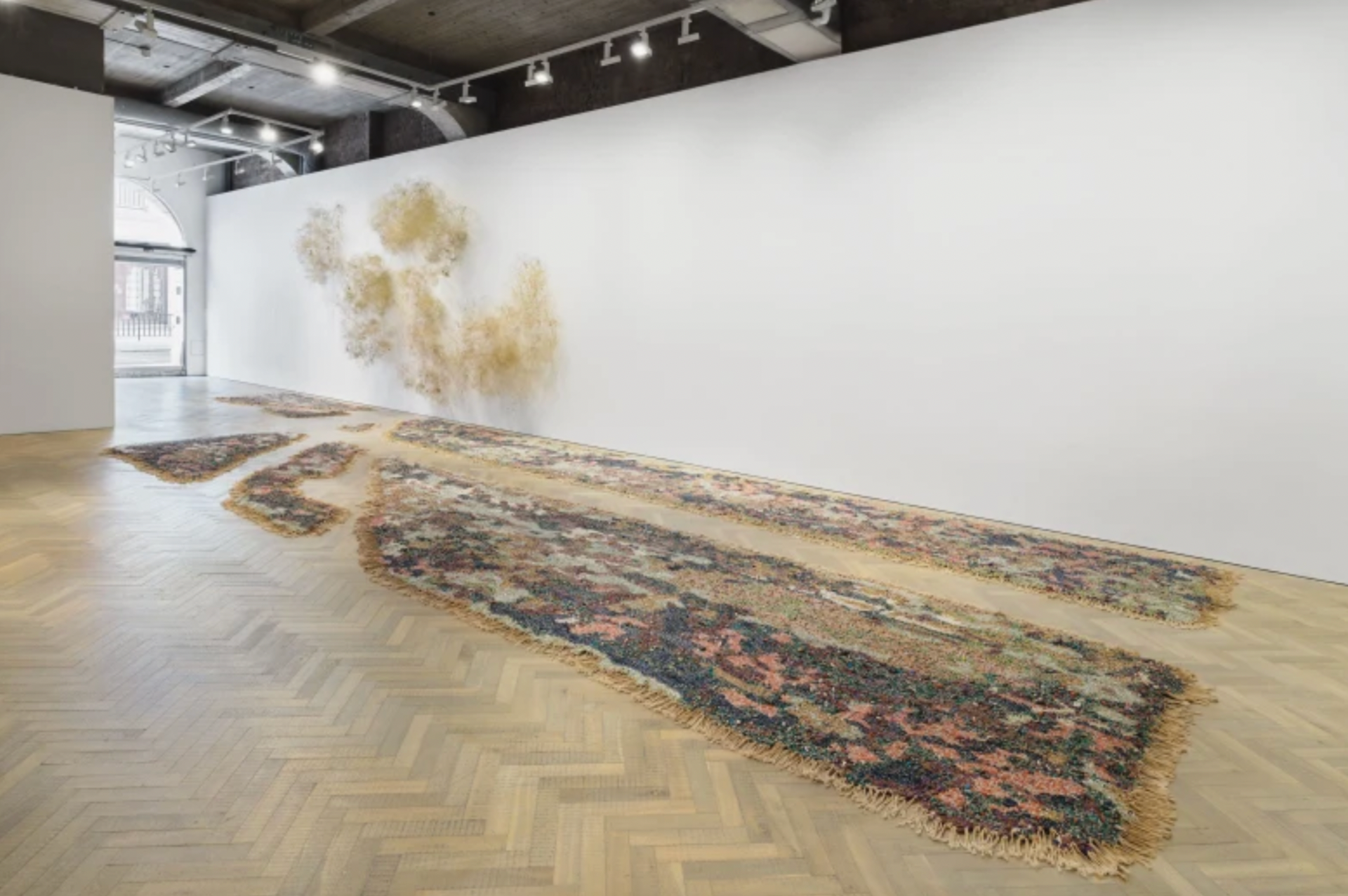
In his oeuvre, Igshaan Adams responds to a distinct spatial mode from Nassar or Aguiñiga. Adams, born in 1982 and raised in a segregated neighborhood of Cape Town, was immersed in the spatially restrictive South African apartheid regime for much of his childhood and adolescence. Adams’ identity is marginal on many fronts: Like Nassar and Aguiñiga, he is openly queer, but he also descends from enslaved peoples trafficked to South Africa by Dutch colonists, making him ‘Cape Malay,’ a racial minority valued between White and Black South Africans under apartheid systems of racial discrimination. Adams experienced firsthand the spatial engineering of apartheid and the ways intersections of race, class, and religion governed human movement. A primary theme of Adams’ work is the ‘desire line,’ featured prominently in his exhibition of the same name. He references the physical artifacts of routes that flout infrastructural control, such as the paths between his Cape Malay neighborhood and the neighboring Black neighborhood. Jessica Hemmings’s examination of Adams’s work within the conceptual framework of ‘minor architecture,’ proposed by Jill Stoner as an adaptation of Deleuze and Guattari’s ‘minor literature.’ Adams’ practice operates within the interstices of dominant spatial structures by mobilizing materials associated with poverty and domestic labor, such as linoleum flooring and beading.³ Thus, Hemmings remarks that Adams’ work falls within Stoner’s realm of the ‘unremarkable.’ 4 Through his use of material, Adams reconstitutes the remnants of apartheid into speculative experiential spaces in which apartheid structures collapse into themselves. Adams imbues his works with lived human movement, making the structures themselves feel almost human. His suspended fiber environments and found-material bricolage encourage a counter-engagement with the past on the part of the viewer. As Hemmings states plainly, “Adams’ worn flooring and weavings bring together interiors Apartheid wished to separate.” (5)
Taken together, the practices of Nassar, Aguiñiga, and Adams show a contemporary zeal for the fiber medium beyond a simple response to political milieu. Fiber’s key potentiality is to absorb and restructure our lived experiences. Each exhibited artist manipulates textile architectures in the face of colonial structures of homogeneity. Jordan Nassar composes counter-spatial works that embrace and dialogue with the yearning of the Palestinian diaspora. He reimagines contemporary Palestine as a speculative paradise, and in a way, makes it real. Tanya Aguiñiga uses community and performance to connect people on both sides of the border, and in doing so refuses its means of control. Igshaan Adams reassembles the spatial debris of apartheid into experiential environments that repair generations of state violence, and through artifacting the stories of others, he better understands his own. The work of these three artists permits an understanding of liminal or marginal existence as holding an immense potential for power. In our postcolonial milieu, fiber’s potentiality for spatial construal and reclamation becomes a means of reclaiming the world itself.
¹ Rachel Dedman, At the Seams: A Political History of Palestinian Embroidery (Birzeit: The Palestinian Museum, 2016), 12–18.
² Sheila Pepe, "International Revolution by Design: The Art of Tanya Aguiñiga," in Public Space/Contested Space (New York: Routledge, 2021), 144–150.
³ Jessica Hemmings, "Towards a Minor Textile Architecture: Kathryn Clark, Loren Schwerd, and Igshaan Adams," in Entangled Histories of Art and Migration: Theories, Sites and Research Methods, ed. Cathrine Bublatzky et al. (Intellect, 2024), 89–95.
4 Jessica Hemmings, "Towards a Minor Textile Architecture: Kathryn Clark, Loren Schwerd, and Igshaan Adams," in Entangled Histories of Art and Migration: Theories, Sites and Research Methods, ed. Cathrine Bublatzky et al. (Intellect, 2024), 100–101.
5 Jessica Hemmings, "Towards a Minor Textile Architecture: Kathryn Clark, Loren Schwerd, and Igshaan Adams," in Entangled Histories of Art and Migration: Theories, Sites and Research Methods, ed. Cathrine Bublatzky et al. (Intellect, 2024), 102.
Bibliography
Dedman, Rachel. At the Seams: A Political History of Palestinian Embroidery. Birzeit: The Palestinian Museum, 2016.
Hemmings, Jessica. “Towards a Minor Textile Architecture: Kathryn Clark, Loren Schwerd, and Igshaan Adams.” In Entangled Histories of Art and Migration: Theories, Sites and Research Methods, edited by Cathrine Bublatzky, Burcu Dogramaci, Kerstin Pinther, and Mona Schieren, 75–103. Bristol: Intellect, 2024.
Pepe, Sheila. “International Revolution by Design: The Art of Tanya Aguiñiga.” In Public Space/Contested Space, edited by Kurt W. Forster and Naomi Stead, 144–150. New York: Routledge, 2021.
Exhibition Layout
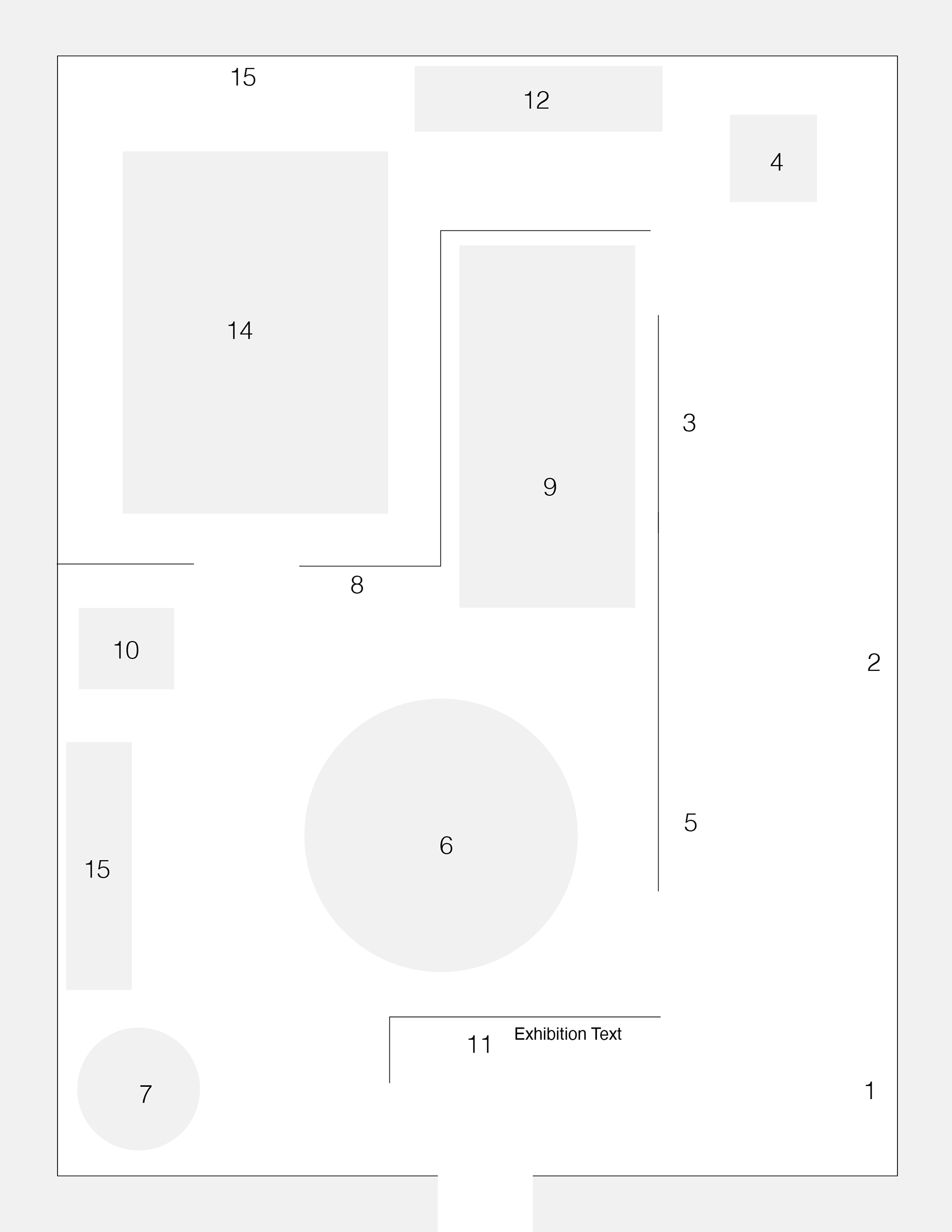
Exhibited Works: Jordan Nassar (1–5)
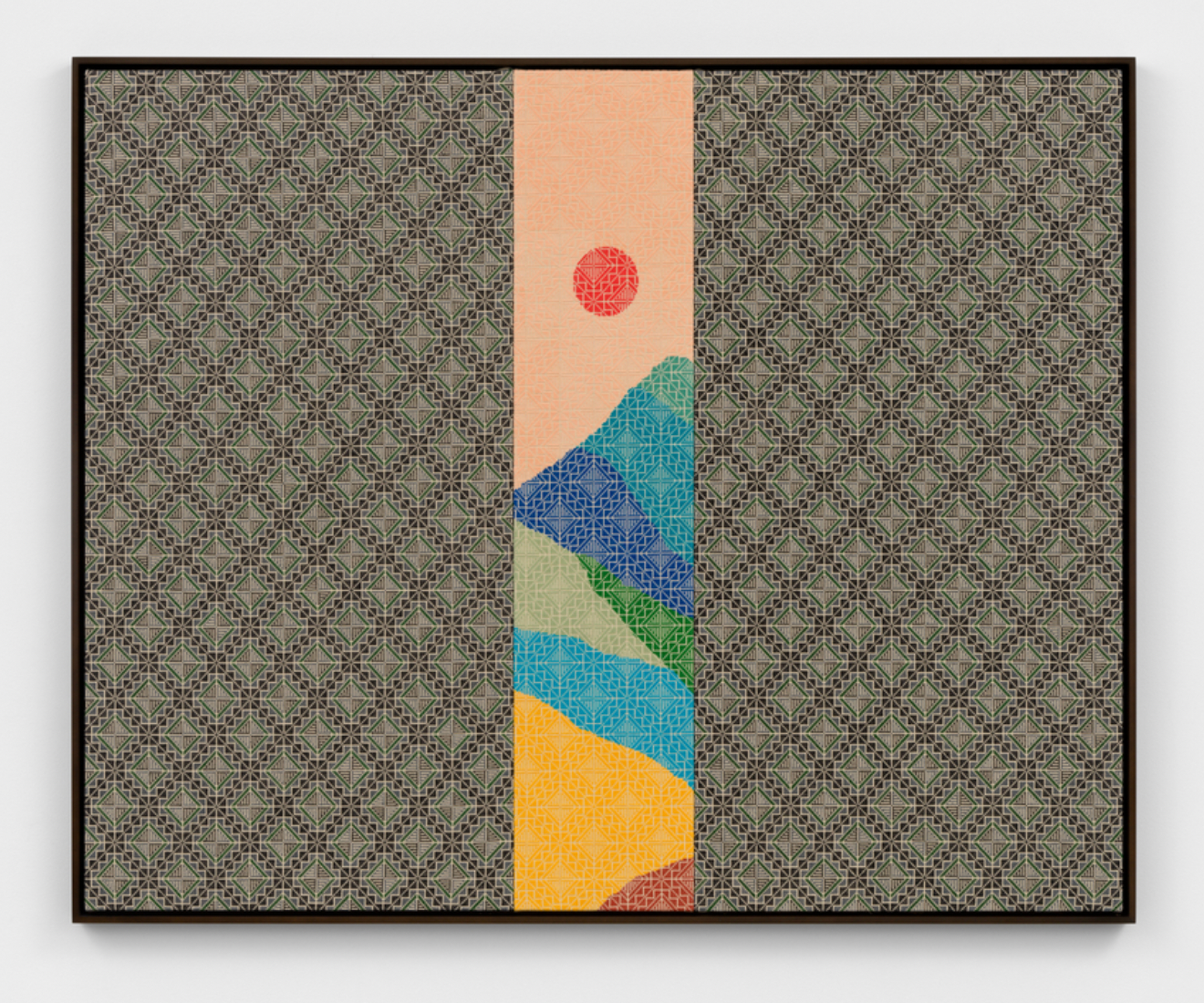
Jordan Nassar, Between Two Hedges of Silence, 2025, hand-embroidered cotton on cotton, 59 × 73 in (149.9 × 185.4 cm).
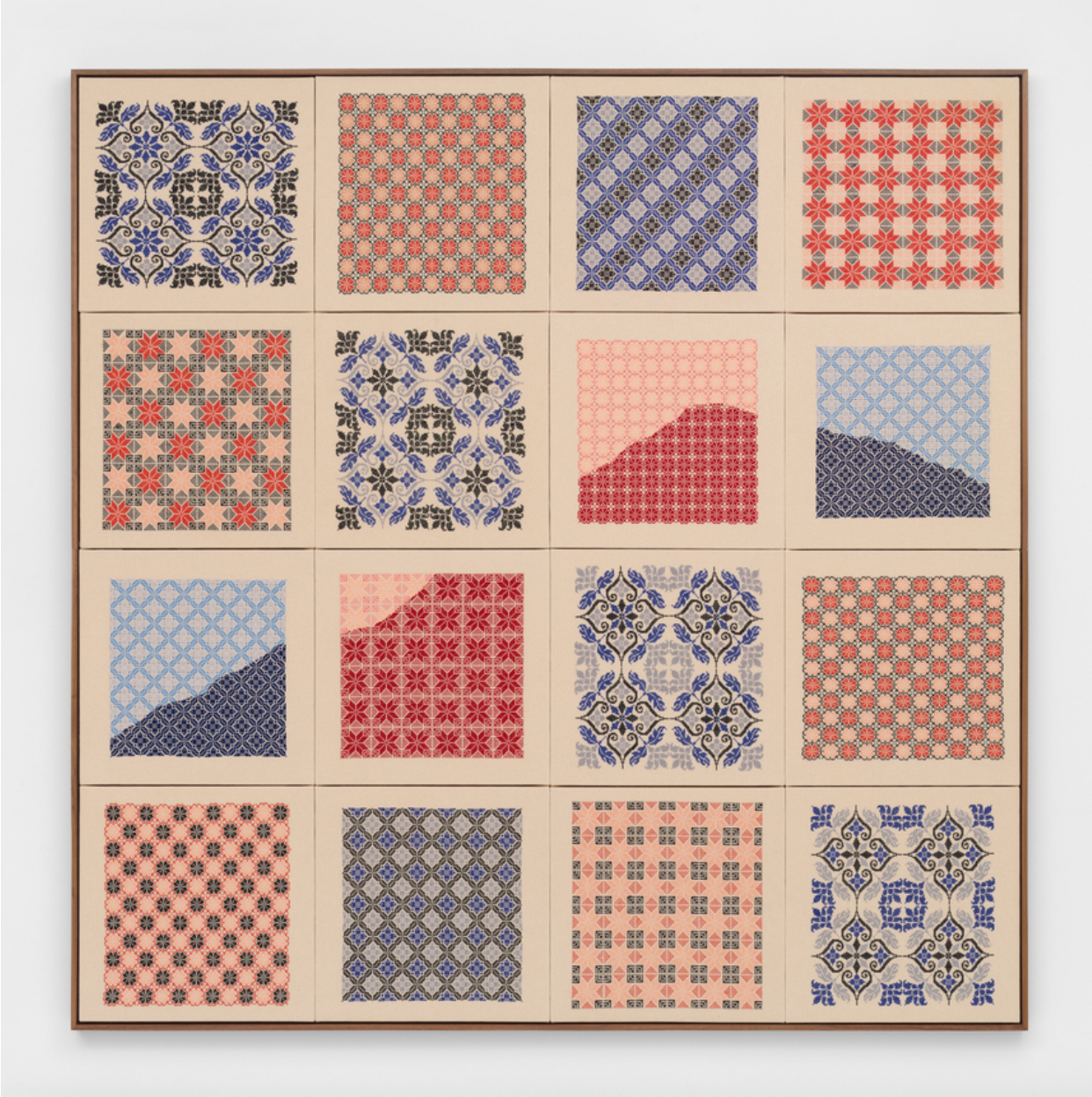
Jordan Nassar, A Mountain Looms, 2023, hand-embroidered cotton on cotton, 84 × 84 × 1 in (213.4 × 213.4 × 2.5 cm).
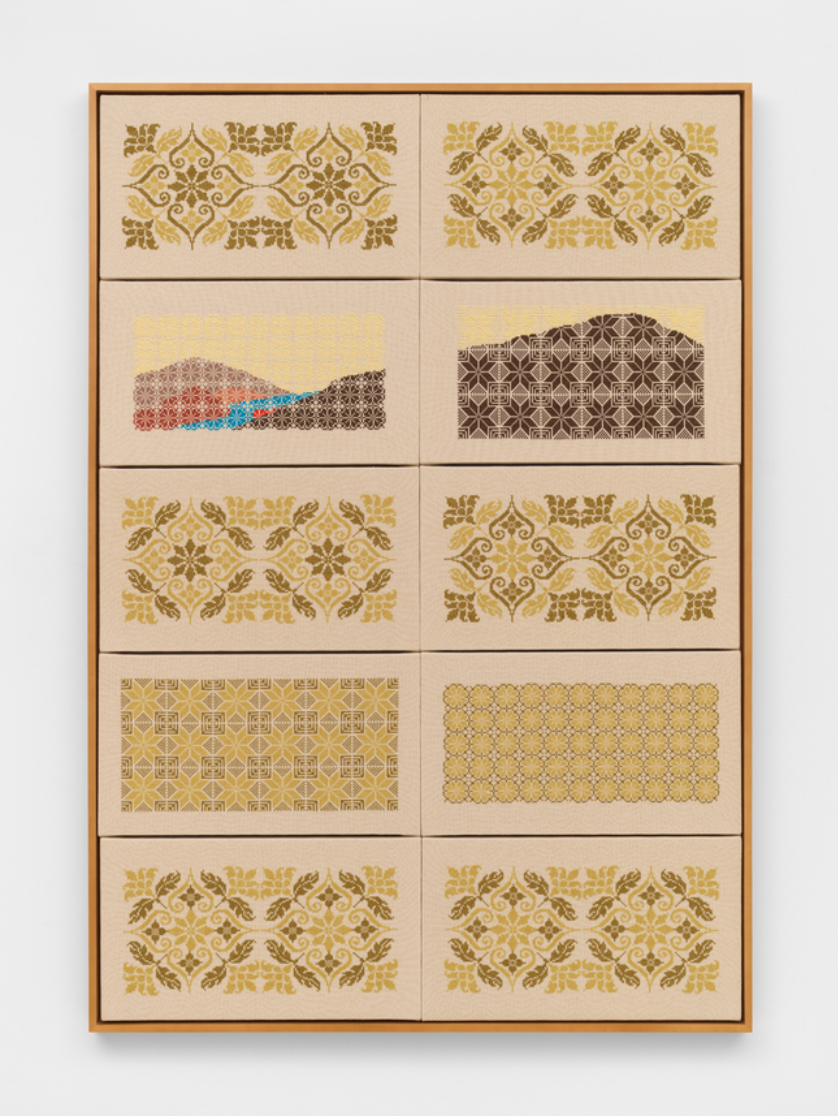
Jordan Nassar, Season of Return, 2023, hand-embroidered cotton on cotton, 60 × 42 × 1 in (152.4 × 106.7 × 2.5 cm).
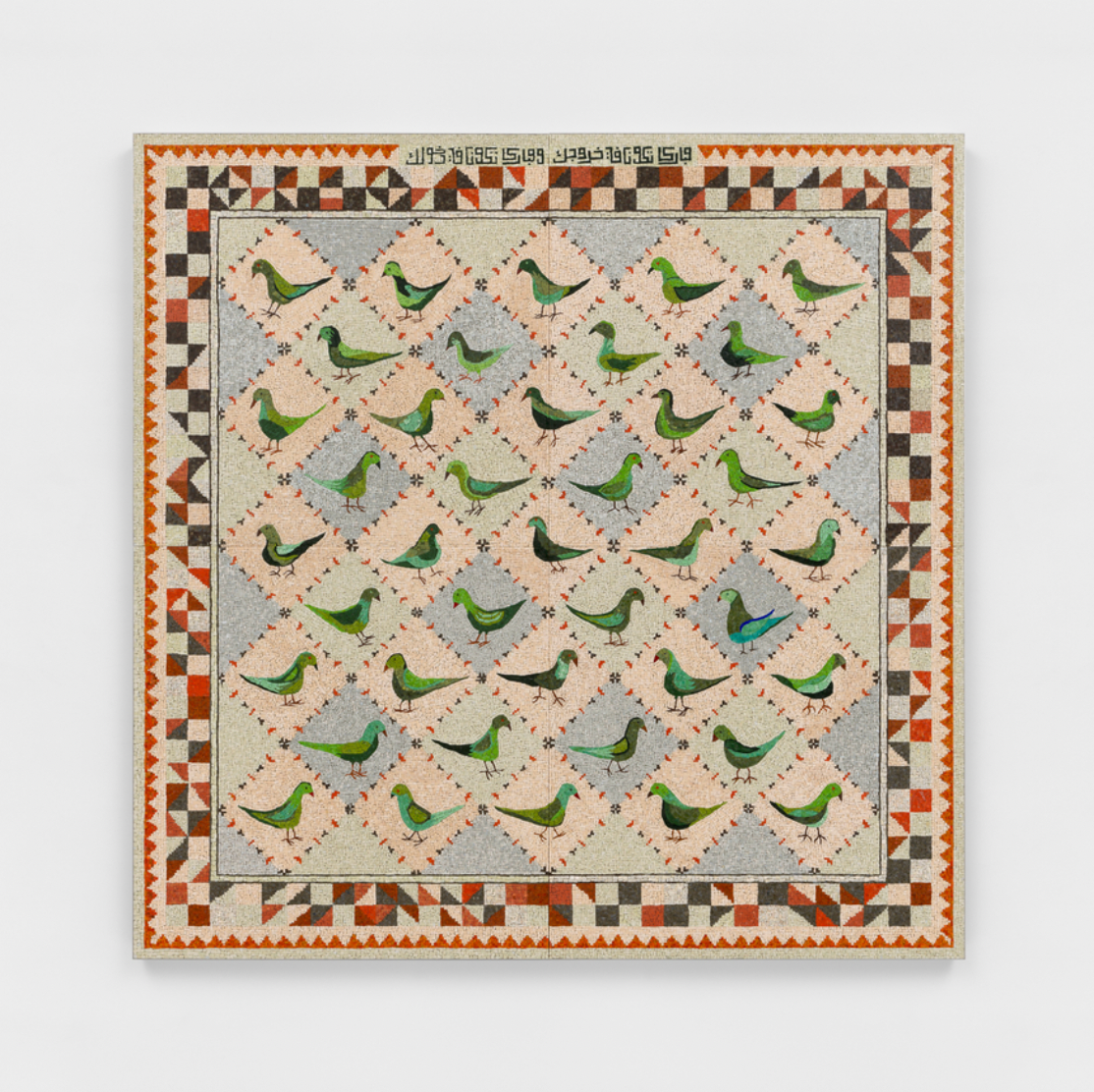
Jordan Nassar, Bisan (Blessed shalt thou be when thou comest in, and blessed shalt thou be when thou goest out) (Deuteronomy 28:6), 2025, smalti tile mosaic on aluminum, 96 × 96 in (243.8 × 243.8 cm).
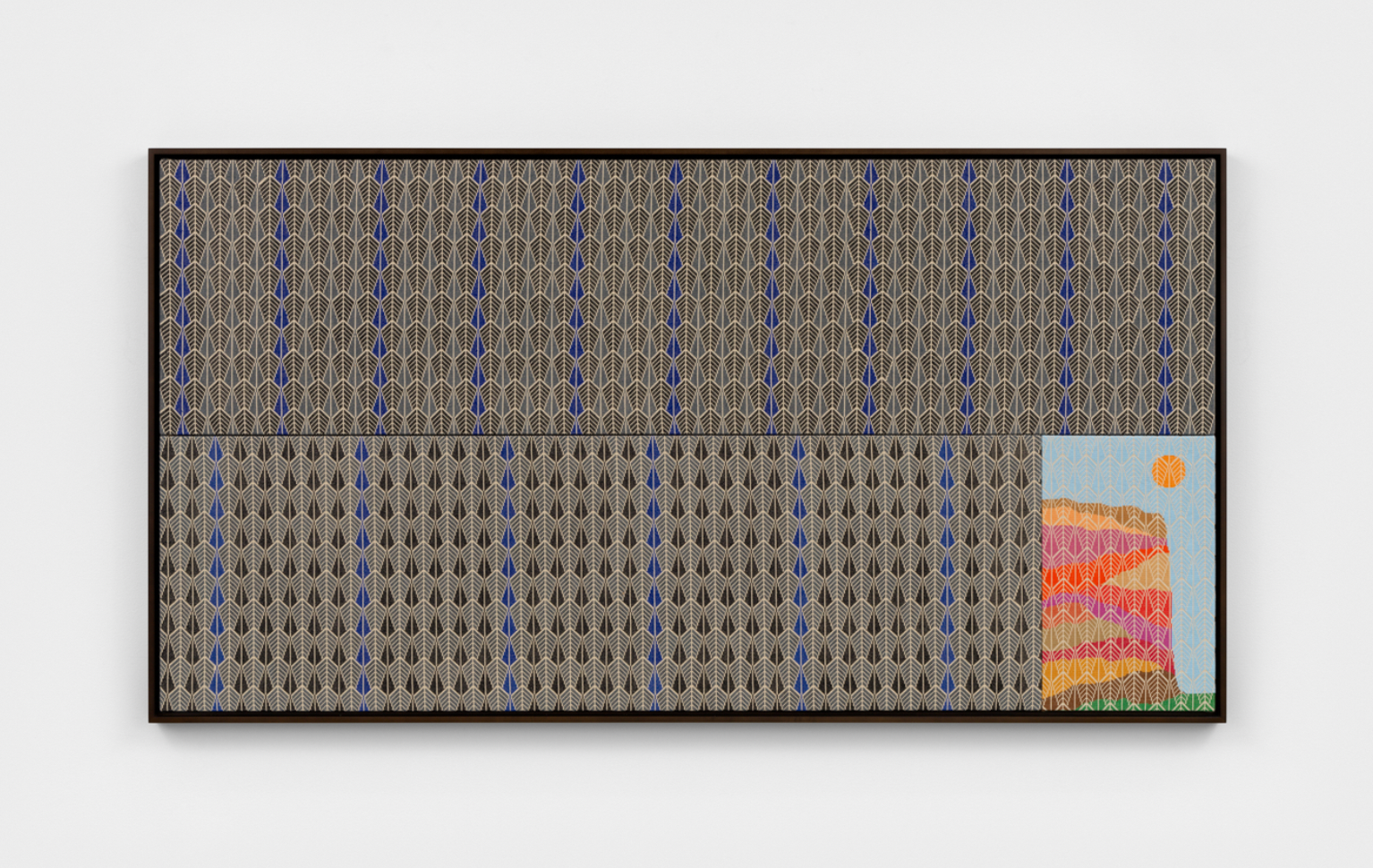
Jordan Nassar, When the sun does justice to life and death in the middle of the sky / a mask of steel descends over its face, 2025, hand-embroidered cotton on cotton, 85 × 44 in (215.9 × 111.8 cm).
Exhibited Works: Tanya Aguiñiga (6–10)
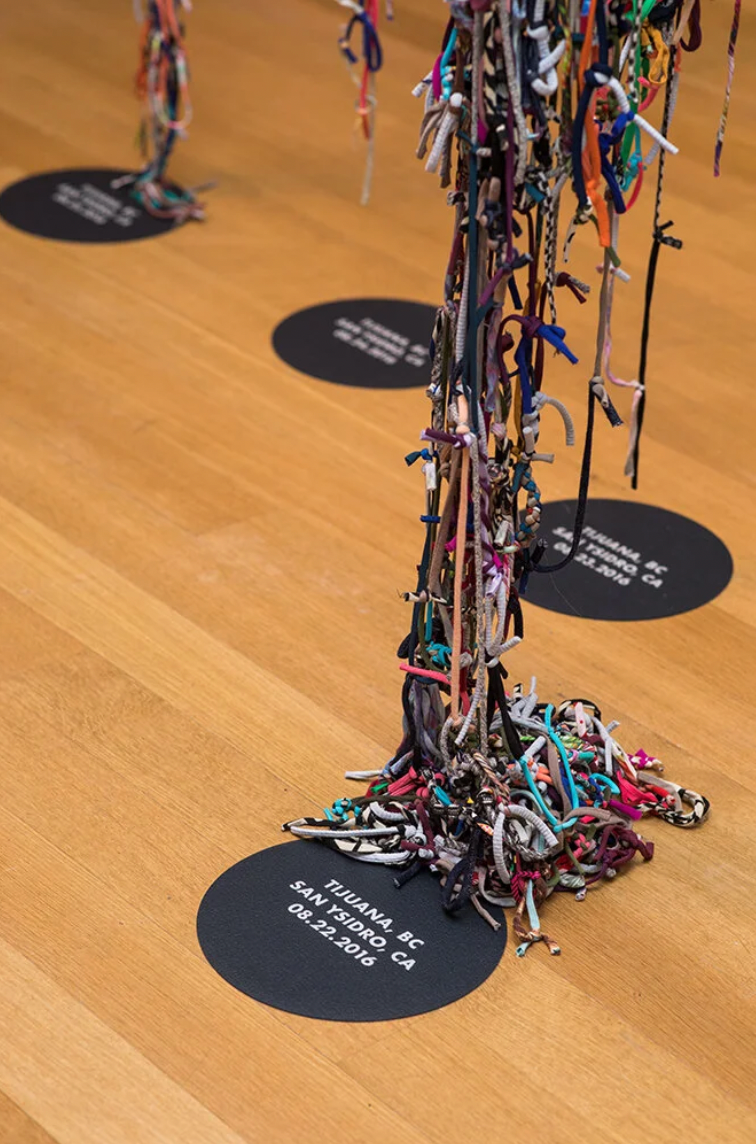
Tanya Aguiñiga, Border Quipu/Quipu Fronterizo, 2016–2018, mixed media sculpture composed of knotted fabric strands collected from border crossing participants, dimensions variable (Los Angeles County Museum of Art collection).
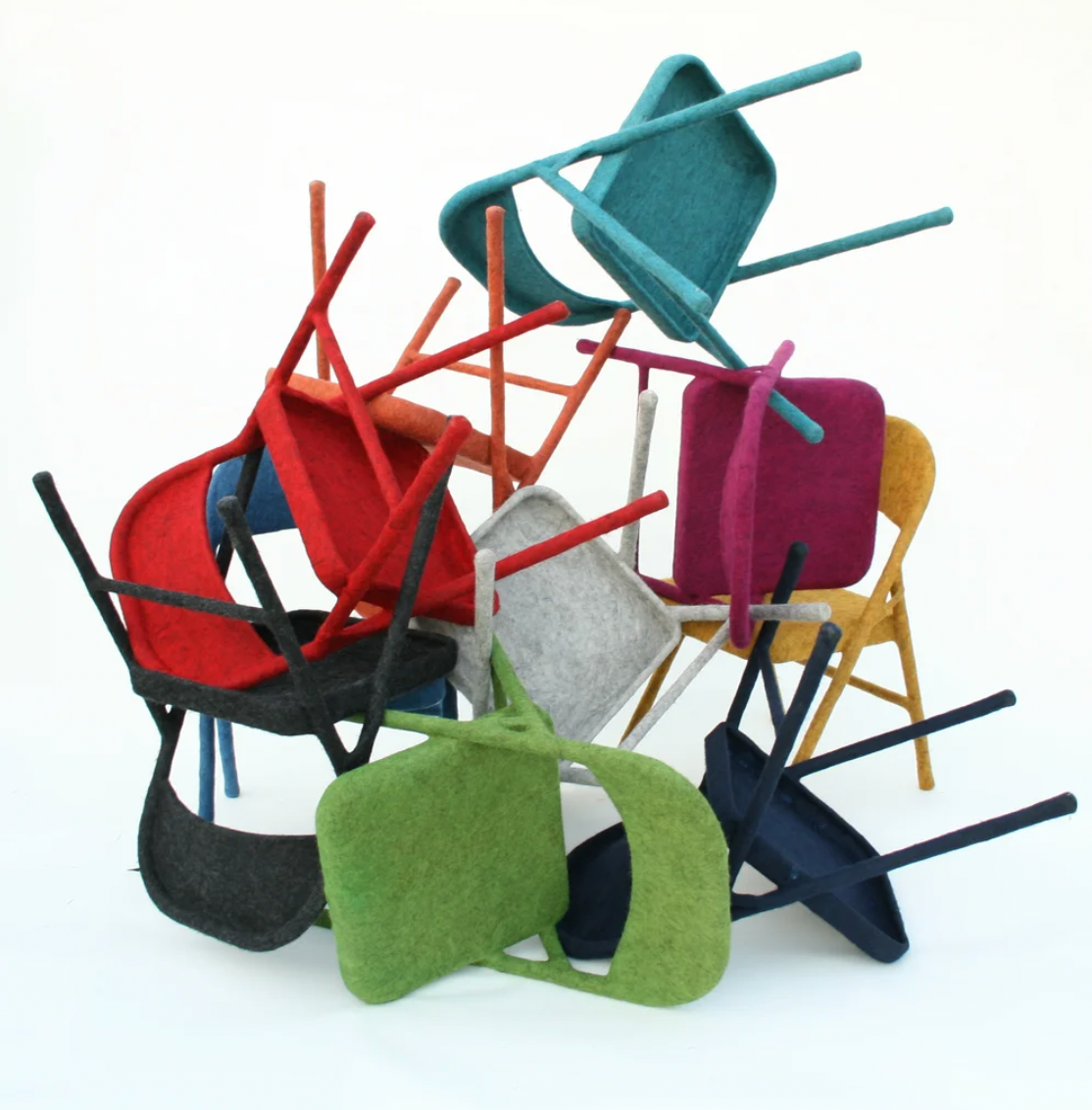
Tanya Aguiñiga, Hand-Felted Found Chairs, ca. 2012, hand-felted found folding chairs (wool felt on metal folding chaisr), 29.25 × 18.75 × 18 in (seat height: 17 in)
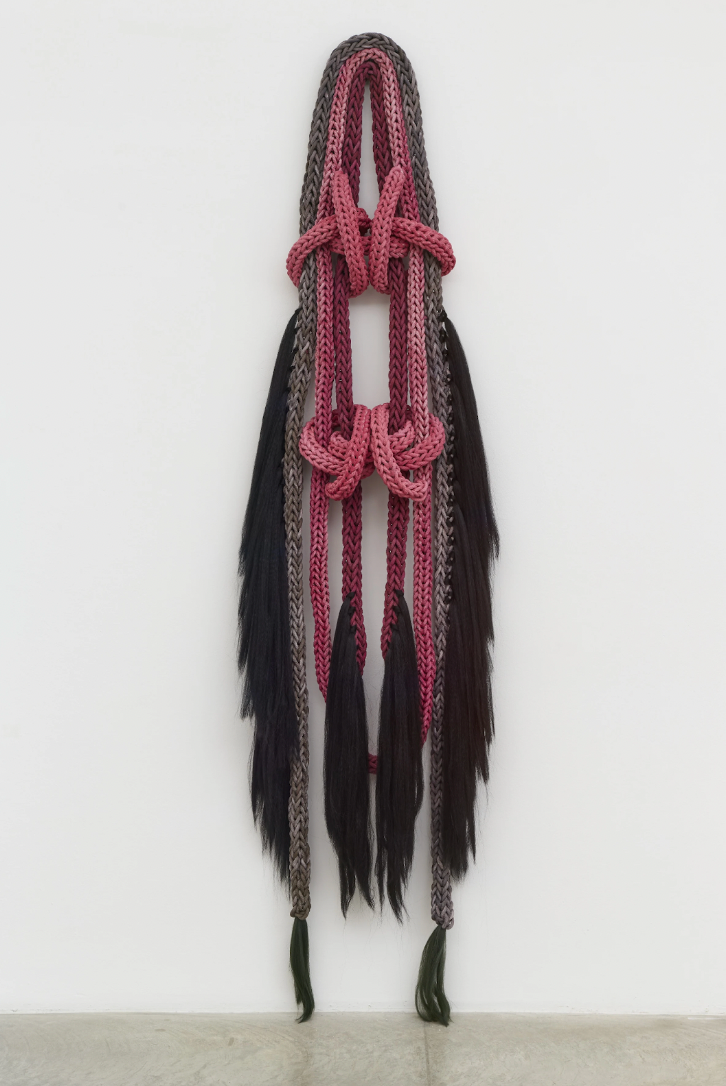
Tanya Aguiñiga, Seven Sisters (Celaeno), 2025, Cochinilla-dyed cotton rope and heckled flax, 102 × 27 × 8.5 in (259.1 × 68.6 × 21.6 cm).
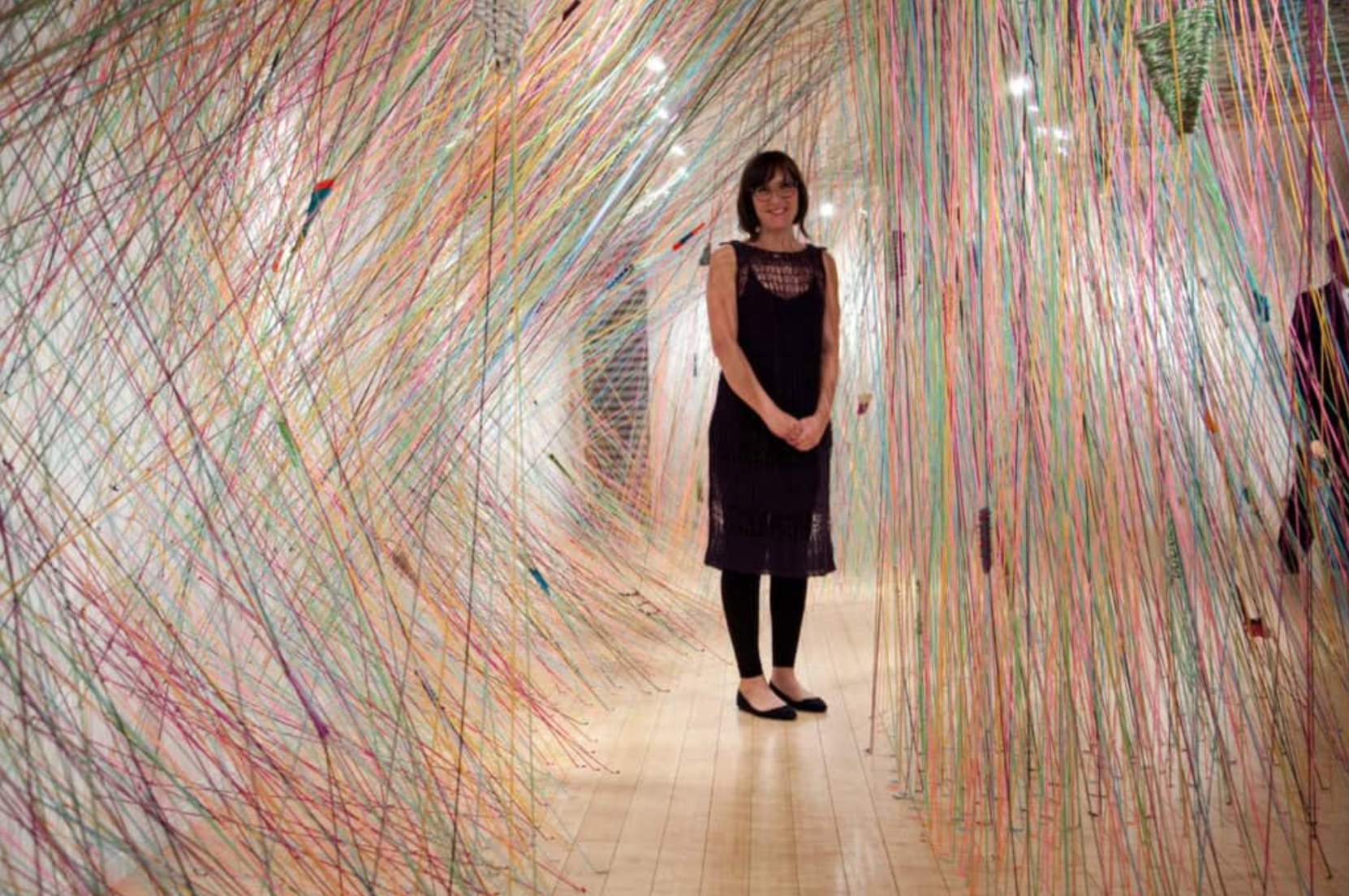
Tanya Aguiñiga, Crossing the Line: A Space, 2011, site-specific installation using backstrap weaving techniques and mixed textile materials, dimensions variable.
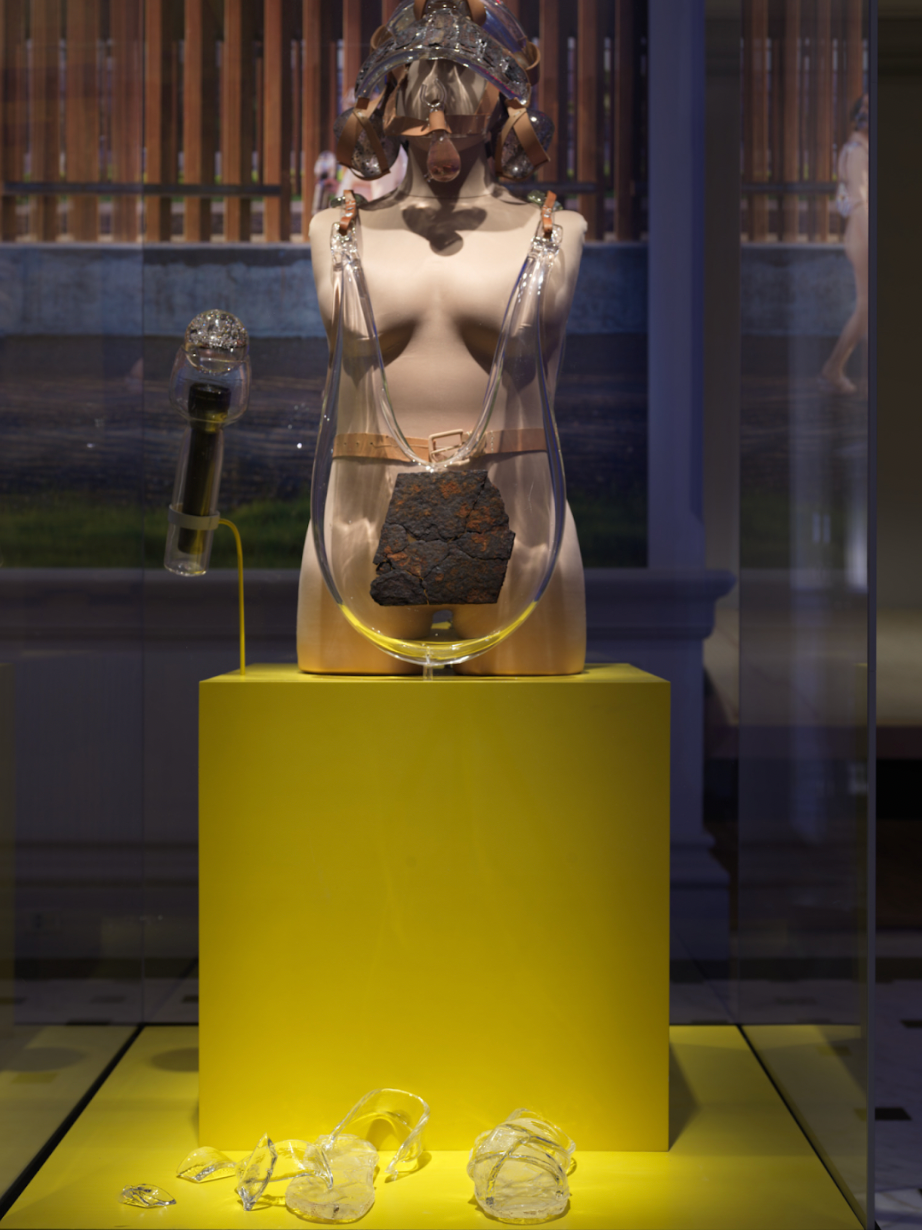
Tanya Aguiñiga, Metabolizing the Border, 2018–2020, performance with wearable objects (glass, neoprene, rusted metal fragments of U.S.–Mexico border fence, leather, cotton twine, flashlight) and digital photodocumentation, dimensions variable.
Exhibited Works: Igshaan Adams (11–15)
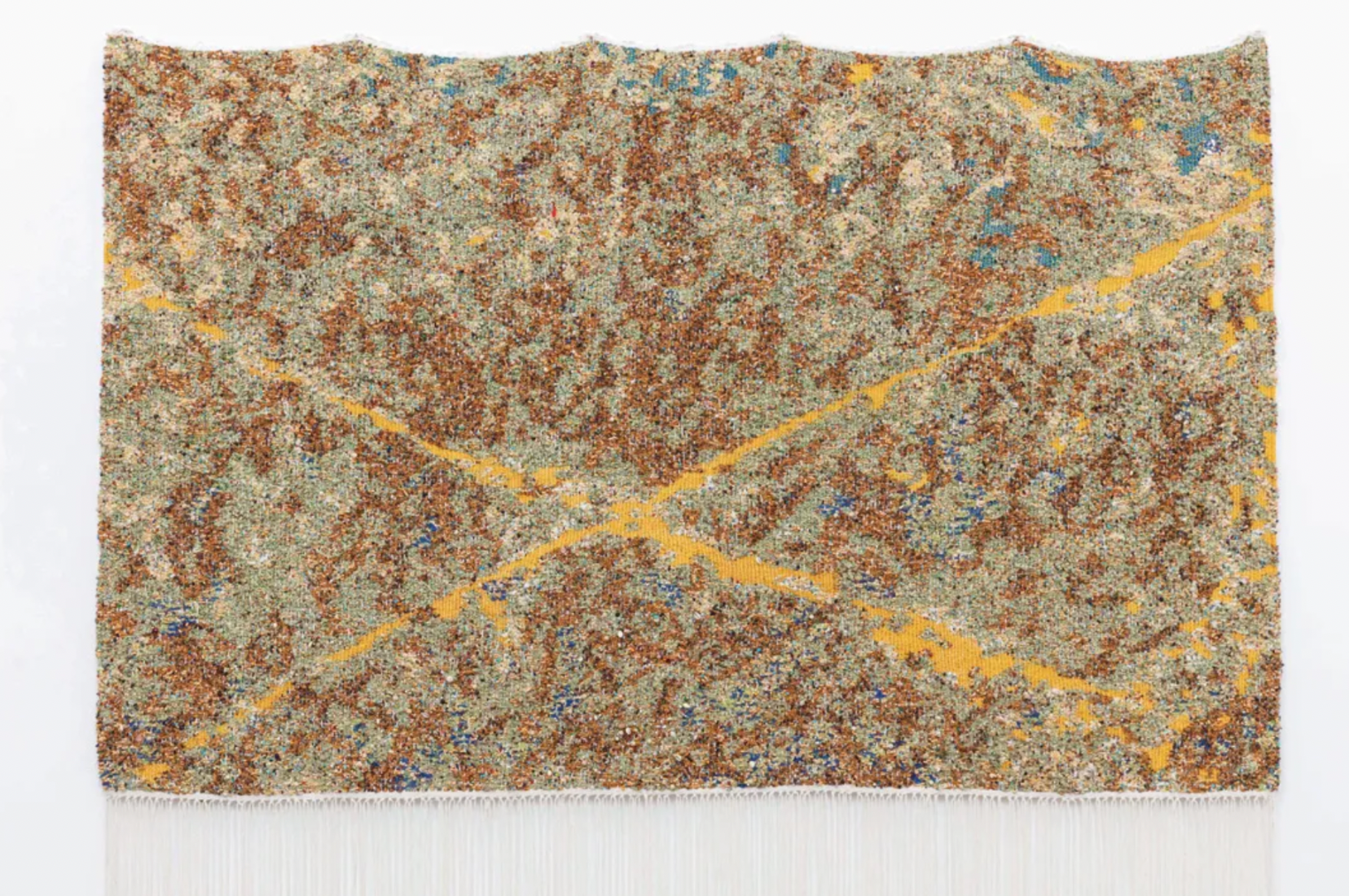
Igshaan Adams, Langa, 2021, paint on wood, plastic beads, glass beads, stone beads, bone beads, polyester rope, nylon rope, cotton fabric, chain, wire, cotton twine, 7 ft 10.5 in × 10 ft 2.875 in.
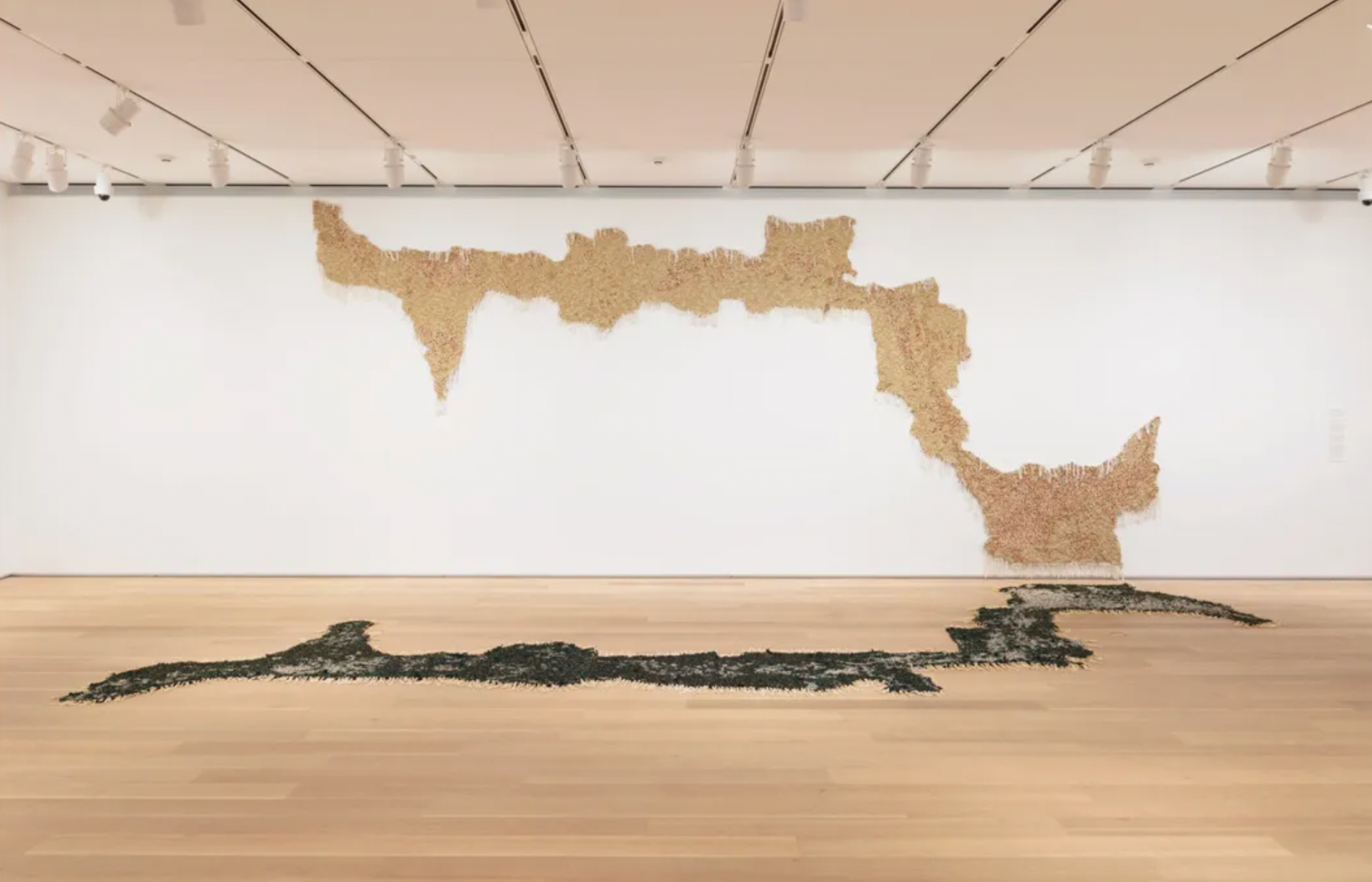
Igshaan Adams, 11b Larch weg (i), 2019, mixed media with beads, rope, wire, and textile elements, dimensions variable. Igshaan Adams, 11b Larch weg (ii), 2019, mixed media with beads, rope, wire, and textile elements, dimensions variable.
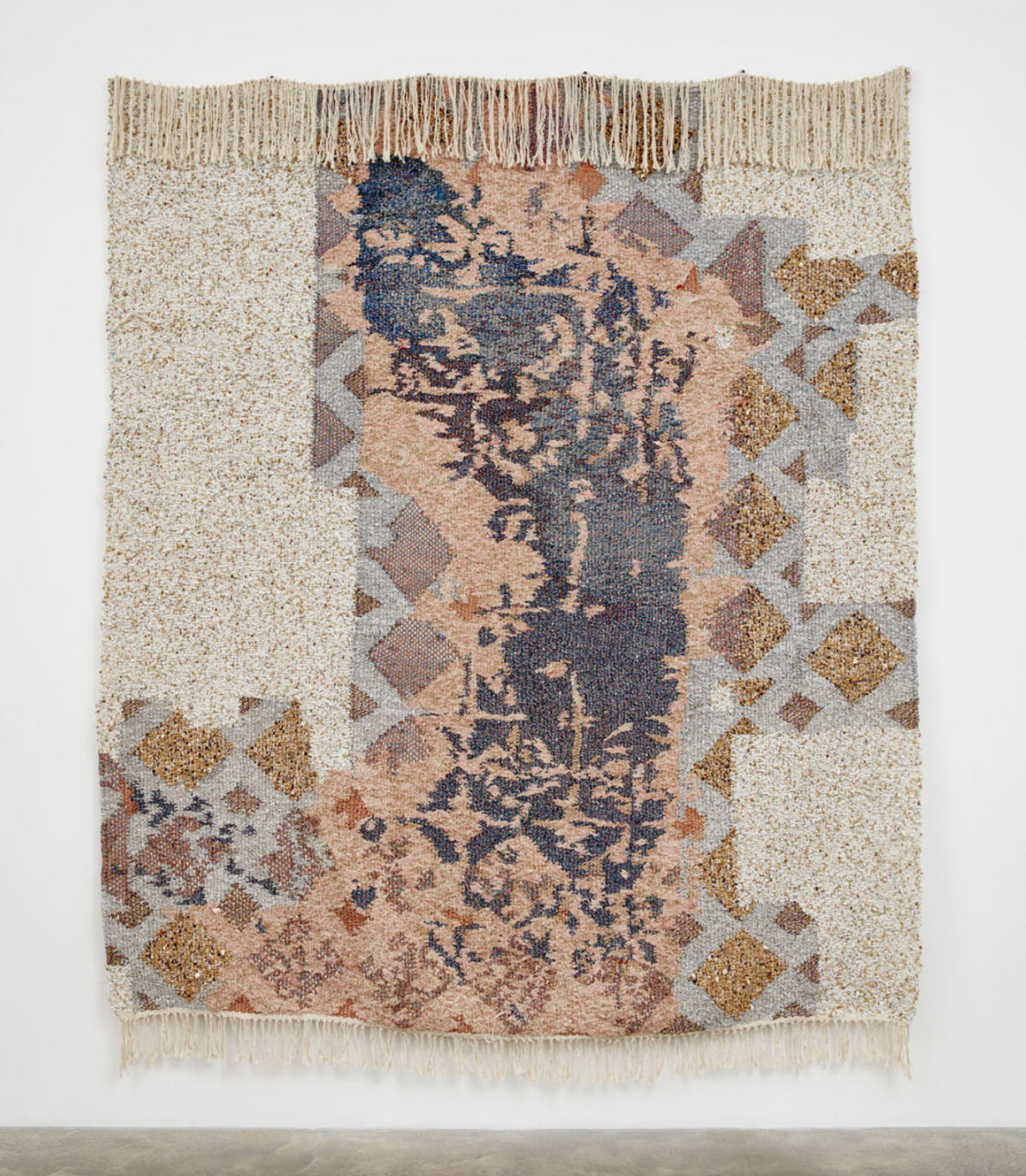
Igshaan Adams, RENTMEESTERIN (stewardess), 2021, wood, plastic, glass, shells, paint and stone beads, polyester and nylon rope, chain, fabric, cotton twine, 110 × 87 in (279.4 × 221 cm).
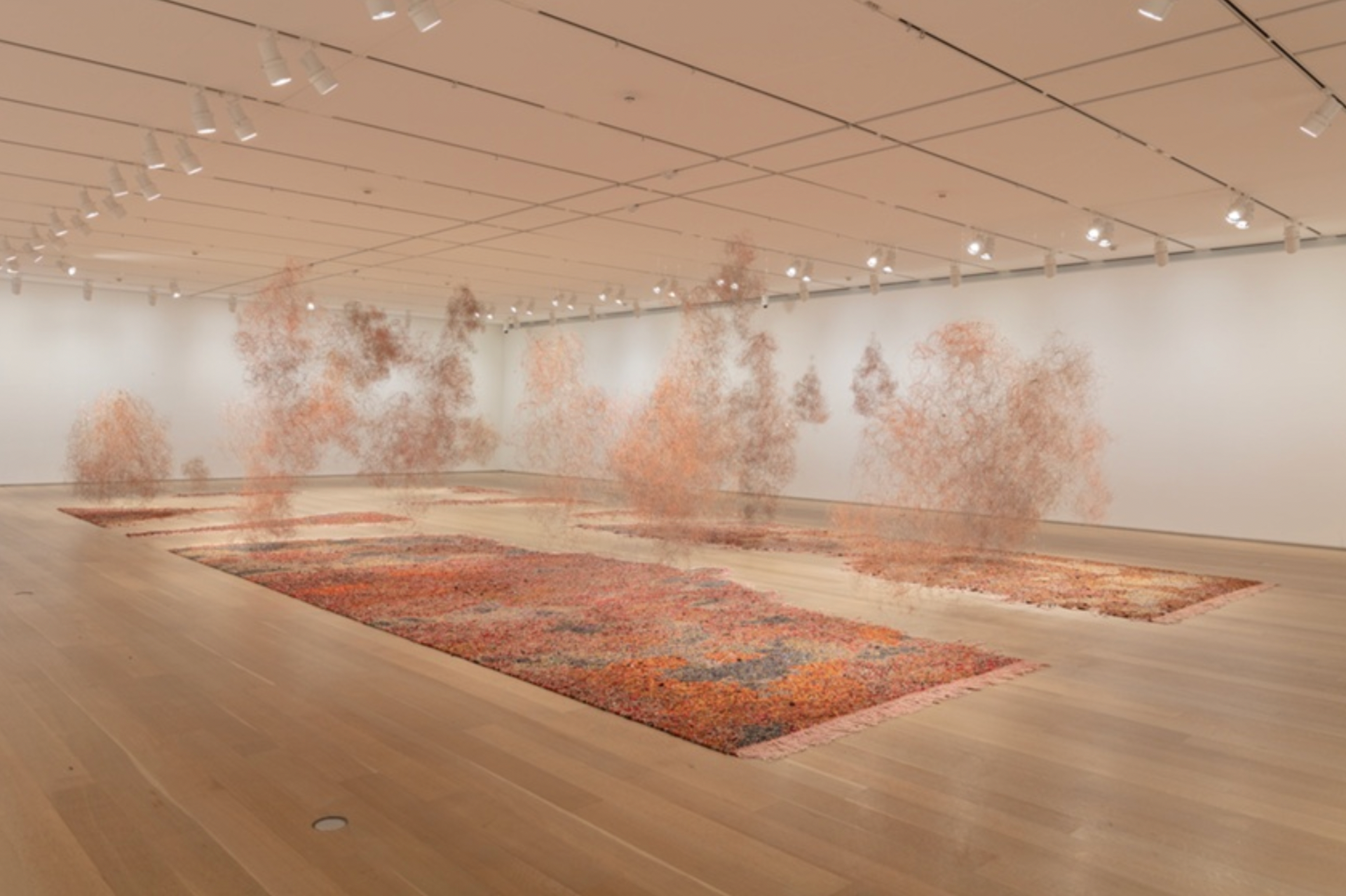
Igshaan Adams, Epping II, 2021, wood, painted wood, plastic, glass, stone beads, seashells, chain, polyester and nylon rope, cotton fabric, wire, cotton twine, and fabric dye, 1500 × 700 × 300 cm (590 5/8 × 275 5/8 × 118 1/8 in).